A squint (called bhengapan in Punjabi and Hindi, and strabismus by doctors) is when the two eyes do not look in the same direction. One eye looks straight while the other turns in, out, up or down. It is common in children and also occurs in adults. Many families believe a child will “grow out of it”. That is not true. An untreated squint can permanently weaken the vision in the turning eye.
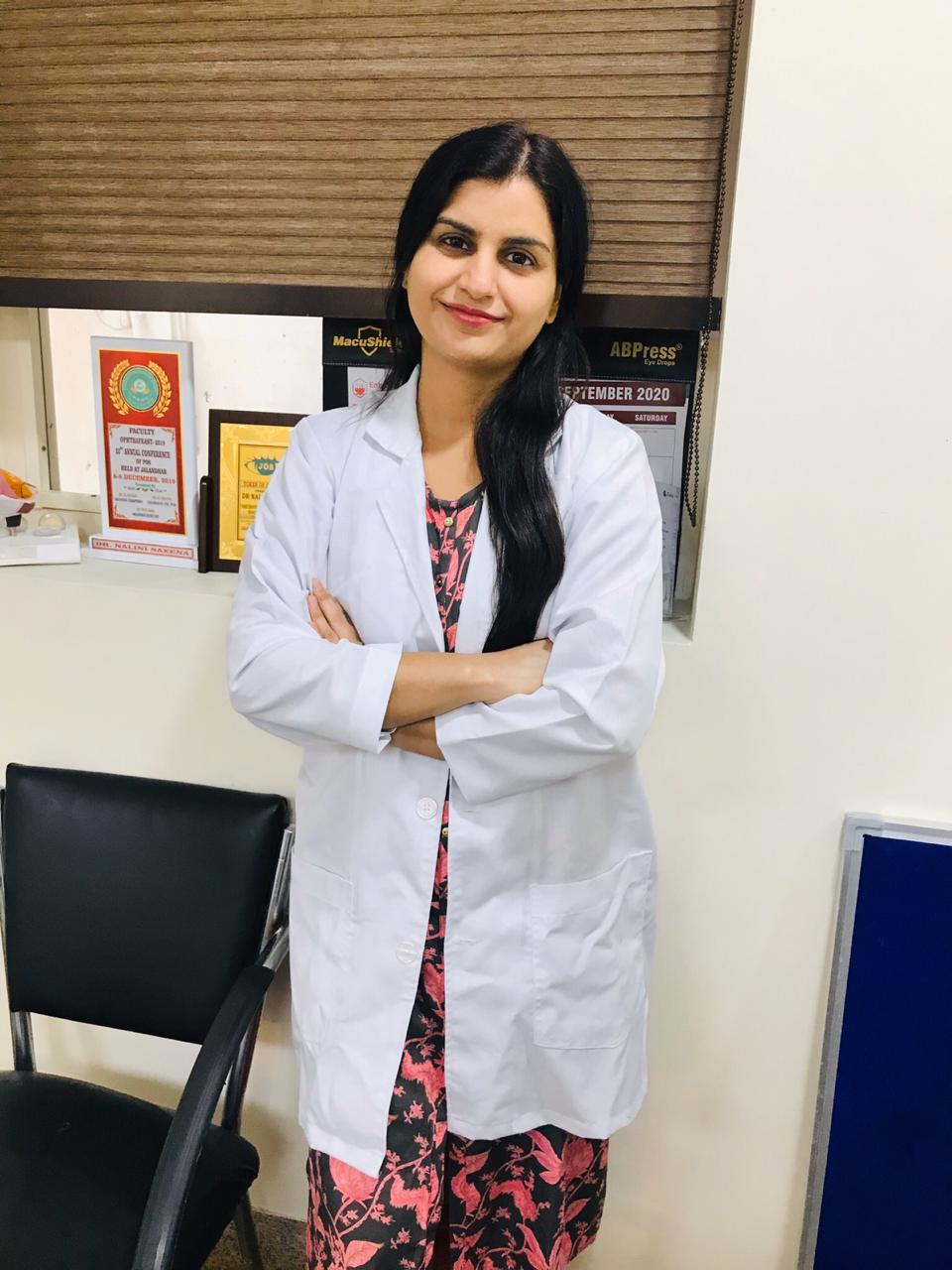
At Drishti Eye Care & Retina Centre in Lambra, Jalandhar, Dr Nalini Saxena, MS Ophthalmology from Maulana Azad Medical College, New Delhi, diagnoses and manages squint in children and adults.
Does your child's eye turn in or out?
The earlier a squint is treated, the better the chance of normal vision in both eyes. Book a squint examination with Dr Nalini Saxena — call or WhatsApp us.
What is a squint?
Each eye is moved by six small muscles. The brain controls these muscles so that both eyes point at the same object. In a squint, this teamwork breaks down. The eyes point in different directions, so the brain receives two different pictures.
A child's brain solves this by ignoring the picture from the turning eye. Over time, the ignored eye stops developing and becomes a lazy eye (amblyopia). A lazy eye can look normal but see poorly, and after about 7 to 8 years of age this weak vision becomes hard to reverse. This is why treating a squint early is about vision, not only appearance.
An adult's brain cannot ignore one eye so easily, so adults with a new squint usually see double.
Common causes of squint include:
- A high glasses number, especially a high plus number, which makes the eyes turn inward when the child tries to focus
- Poor vision in one eye, for example from a childhood cataract, a retinal problem, or an injury — the eye that cannot see drifts
- Weakness of a nerve controlling the eye muscles, which in adults can follow diabetes, a head injury or a stroke
- Premature birth — babies who had retinopathy of prematurity have a higher chance of squint
- Family history — squint often runs in families
Signs of a squint
In babies and young children, look for:
- One eye turning in towards the nose, or out towards the ear, all the time or only sometimes — for example when the child is tired, ill or looking at something close
- Eyes that do not move together
- Closing or covering one eye in bright sunlight
- Tilting or turning the head to look at things
- In photographs, the flash reflection sitting in a different spot in each eye
In adults, the main symptoms are double vision, eye strain, headaches, and the eye visibly turning. Some adults have had a squint since childhood and want it corrected for appearance. This is possible at any age.
Note: many babies under 6 months appear to have a mild inward squint because of a wide, flat nose bridge. This “false squint” disappears as the face grows. A simple examination tells the difference.
When to see a doctor
Bring your child for an examination if:
- An eye turn is seen at any time after 4 to 6 months of age, even if it is only occasional
- A parent, brother or sister has a squint or a lazy eye
- The child was born premature
A squint appears suddenly in an older child or adult, especially with double vision, headache, a drooping eyelid or a white reflection in the pupil. A sudden new squint can signal a nerve, brain or serious eye problem and needs to be examined quickly.
How Dr Nalini treats squint
Dr Nalini Saxena has over ten years of experience as an eye surgeon and has passed the examination of the Royal College of Surgeons. The first step is a careful examination to find the cause of the squint, because the treatment depends on it. She checks the vision in each eye, measures the glasses number after drops, measures the angle of the squint, checks the eye movements, and examines the retina to rule out a hidden cause.
Glasses
Many childhood squints are caused by a glasses number. Wearing the correct glasses full-time can straighten the eyes completely in some children, so this is always tried first.
Treating lazy eye
If one eye has become lazy, the good eye is covered with a patch for a set number of hours each day. This forces the brain to use the weaker eye and strengthens its vision. Patching works best in young children and can take months. Dr Nalini shares a lazy eye patient success story on her YouTube channel.
Exercises
Some types of squint, especially when the eyes drift outward only at times, respond to eye exercises that train the eyes to work together.
Surgery
When glasses and exercises are not enough, the eye muscles are surgically adjusted to straighten the eyes. Surgery is done under general anaesthesia in children and usually takes under an hour.
What to expect on the day
A squint examination for a child takes one to two hours, because drops are used to measure the glasses number accurately, and they take 30 to 45 minutes to work. The drops sting briefly and cause blurred near vision and large pupils for the rest of the day. Bring a snack, a favourite toy, and any previous glasses or reports. Do not worry if your child is not cooperative — tests can be repeated at another visit if needed.
Adults are examined in the same way, with extra attention to the cause of a new squint.
Recovery and follow-up
- Glasses: a child may take a few weeks to accept glasses. Persist. The eyes are re-checked after a few months and the number is updated as the child grows.
- Patching: vision in the lazy eye is checked every few weeks to months. Patching hours are reduced as vision improves and stopped once it is stable.
- After surgery: the eye is red and gritty for one to two weeks and drops are used for a few weeks. School can usually be resumed within a week. Glasses are often still needed after surgery.
Follow-up continues until the child is about 8 years old, because vision is still developing until then.
Cost of squint treatment in Jalandhar
Costs depend on what your child needs:
- Examination — a detailed squint work-up with drops, plus follow-up visits.
- Glasses — the cost of frames and lenses, updated as the number changes.
- Patching and exercises — low cost, but need several review visits over months.
- Surgery — depends on the number of muscles operated, whether one or both eyes are involved, and the anaesthesia and hospital charges.
We explain the plan and the costs before starting. Ask our staff about insurance and government scheme paperwork.
Frequently asked questions
Book a squint check in Jalandhar
Drishti Eye Care & Retina Centre, Lambra. Mon to Sat, 10 AM to 6 PM. Children and adults welcome.