Glaucoma (known as kala motia in Punjabi and Hindi) is a disease where the pressure inside the eye slowly damages the optic nerve — the cable that carries pictures from the eye to the brain. The damage is permanent. Vision lost to glaucoma cannot be brought back. But if glaucoma is found early and the pressure is controlled, further loss can be stopped, and most patients keep good vision for life.
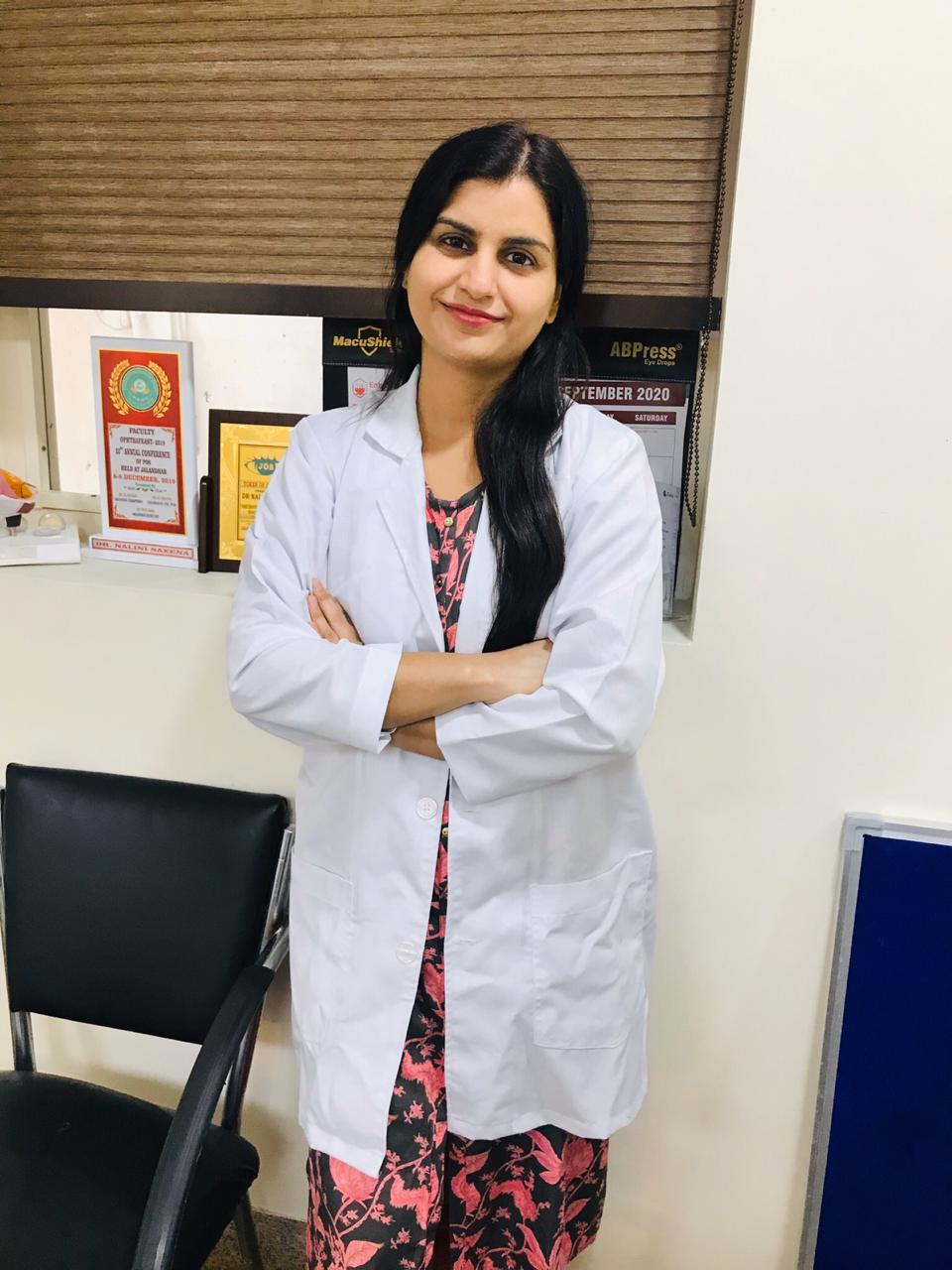
Unlike a cataract (safed motia), which surgery can remove, glaucoma has to be managed for life. At Drishti Eye Care & Retina Centre, Lambra, Jalandhar, Dr Nalini Saxena, MS Ophthalmology from Maulana Azad Medical College, offers diagnosis and long-term management of glaucoma.
Over 40, or glaucoma in the family?
A simple eye pressure check can catch glaucoma before it steals your sight. Book a glaucoma screening with Dr Nalini Saxena — call or WhatsApp us.
What is glaucoma?
The eye constantly makes a clear fluid and drains it out through a tiny channel. When the drain becomes slow or blocked, fluid builds up and the pressure inside the eye rises. This presses on the optic nerve. Nerve fibres die one by one, and the field of vision shrinks from the edges inward.
There are two main types:
- Open-angle glaucoma — the common, slow type. The drain is open but does not work well. Pressure rises gradually over years with no symptoms.
- Angle-closure glaucoma — the drain is narrow and can block suddenly, causing a painful “attack”. This is an emergency.
Glaucoma can also follow an eye injury, long-term use of steroids, or a very advanced cataract.
Symptoms of glaucoma
The slow type has no symptoms in the early years. You do not feel pressure, and the centre of your vision stays sharp until the disease is advanced. This is why glaucoma is called the silent thief of sight. Later signs include:
- Bumping into things, or missing objects at the side while driving
- Difficulty seeing in dim light or adjusting from bright to dark
- Tunnel vision in advanced disease
An acute angle-closure attack is very different. It comes on suddenly with severe eye pain, headache, a red eye, blurred vision, coloured halos around lights, and vomiting. It is often mistaken for a migraine.
When to see a doctor
Because early glaucoma is silent, screening is the only way to catch it. You should have an eye pressure and optic nerve check:
- Every one to two years once you are over 40
- Every year if a parent, brother or sister has glaucoma — the risk runs in families
- If you have diabetes, a high minus or plus number, have had an eye injury, or have used steroids for a long time
- Whenever you notice loss of side vision or halos around lights
Sudden severe eye pain with a red eye, blurred vision, halos and vomiting can be an acute glaucoma attack. The nerve can be damaged within hours. Come to the clinic or the nearest eye emergency immediately.
How Dr Nalini diagnoses and treats glaucoma
Dr Nalini Saxena has more than ten years of experience as an eye surgeon and has passed the examination of the Royal College of Surgeons. Diagnosing glaucoma is not a single test:
- Eye pressure — measured with a painless instrument after numbing drops.
- The optic nerve — examined after widening the pupil, looking for the typical “cupping” that glaucoma causes.
- The drainage angle — checked with a special lens on the eye to tell open-angle from angle-closure glaucoma.
- Field of vision — a test where you press a button each time you see a small light. It maps blind areas in your side vision and is repeated over the years to check the disease is stable.
Dr Nalini uses all these findings together to decide whether you need treatment now or careful follow-up.
Treatment
The goal of all glaucoma treatment is to lower the eye pressure to a safe level for your nerve. The first and most common treatment is eye drops, used once or twice a day, every day, for life. Some patients need two or three different drops. Dr Nalini adjusts them based on how your pressure responds.
Patients who also need retina care — for example for diabetic retinopathy — can be managed by the same retina specialist here, rather than seeing two doctors in two places.
What to expect on the day
A glaucoma examination takes longer than a routine eye test, so plan for one to two hours. Your vision is checked, numbing drops are used to measure eye pressure, and the drainage angle is examined with a lens placed gently on the eye. Drops are then put in to widen the pupils so the optic nerve can be examined. A field-of-vision test may be done on the same visit or on a separate day.
Bring all your current eye drops and a list of tablets you take. Your vision will be blurry for a few hours from the dilating drops, so bring someone with you.
Living with glaucoma
There is no “recovery” from glaucoma in the way there is after an operation. Instead, there is control. What makes the difference is:
- Never missing your drops. Pressure rises within a day of stopping them. Put the bottle next to your toothbrush or set a phone alarm.
- Using drops correctly. One drop is enough. Close the eye gently and press the corner near the nose for a minute so the drop stays in the eye.
- Regular reviews. Pressure checks every few months, and a field-of-vision test usually once a year, so any change is caught early.
- Telling other doctors. Some medicines, including steroids, can raise eye pressure. Tell every doctor you see that you have glaucoma.
- Telling your family. Your brothers, sisters and children should get screened.
Cost of glaucoma treatment in Jalandhar
Glaucoma is a long-term condition, so it is better to think of cost per year rather than one-time. The main factors are:
- Diagnosis — the first visit includes several tests, and the field-of-vision test is usually charged separately.
- Eye drops — monthly cost varies with the type and number of drops.
- Follow-up visits — pressure checks every few months and yearly field tests.
- Other treatments — if laser or surgery is needed at any stage, that is estimated separately.
We explain the costs before starting treatment. Ask our staff about insurance and government scheme paperwork.
Frequently asked questions
Book a glaucoma check in Jalandhar
Drishti Eye Care & Retina Centre, Lambra. Mon to Sat, 10 AM to 6 PM. Call or send us a WhatsApp message to book your appointment.