If your baby was born early or with a low birth weight, the blood vessels of the retina — the light-sensing layer at the back of the eye — may not have finished growing. In some of these babies, abnormal vessels grow instead. This is retinopathy of prematurity, or ROP. Caught in time, it can be treated and the baby's sight saved. Missed, it can cause lifelong blindness. There are no outward signs in the early stage, so screening — a planned eye examination by a retina specialist — is the only way to find it.
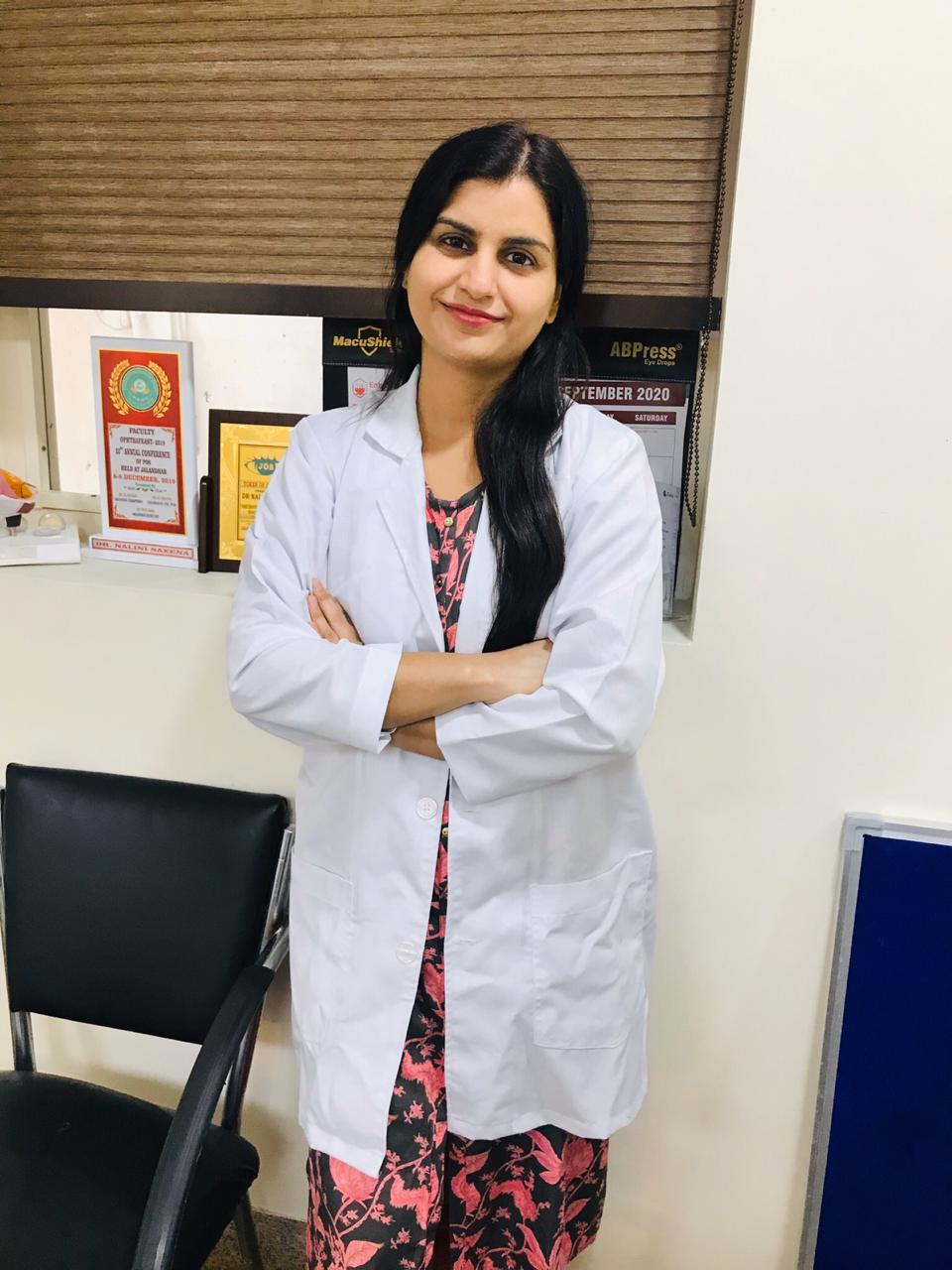
At Drishti Eye Care & Retina Centre in Lambra, Jalandhar, Dr Nalini Saxena offers ROP screening and treatment. She is a fellowship-trained vitreo-retinal surgeon (Venu Eye Institute and Research Centre, New Delhi) with an MS in Ophthalmology from Maulana Azad Medical College.
Was your baby born early or small?
The first ROP screening is due within a few weeks of birth. Call or WhatsApp us to book — tell us the baby's date of birth, weeks of pregnancy, and birth weight.
What is retinopathy of prematurity?
In the womb, the blood vessels of the retina grow slowly from the centre outward, finishing only around the time of a full-term birth. When a baby is born early, this growth is interrupted and the outer retina is left without blood supply. Extra oxygen, infections and other newborn problems can make things worse.
In most premature babies, the vessels continue to grow normally after birth and no treatment is needed. In some, the retina grows new, abnormal vessels instead. These are fragile. They bleed, form scar tissue, and can pull the retina off the wall of the eye — a retinal detachment. In a small baby, this happens over a matter of weeks.
ROP is graded from stage 1 (mild) to 5 (complete detachment). Stages 1 and 2 usually settle on their own. Stage 3 and above, or a fast-progressing form called “plus disease”, need treatment within days.
Signs and symptoms of ROP
This is the most important point for parents: in the stage when ROP can be treated, there are no signs at all. The baby's eyes look normal. Only an examination of the retina after widening the pupil can show the disease.
Signs appear only when the disease is advanced and damage has already happened:
- A white or grey reflection in the pupil instead of the normal black or red
- Eyes that wander, shake, or do not follow faces and toys by 3 to 4 months of age
- A squint (one eye turning in or out)
Do not wait for these signs. By then, treatment options are limited.
Which babies need ROP screening, and when?
Following the national guidelines used in India, ROP screening is advised for babies who were:
- Born before 34 weeks of pregnancy, or
- Born weighing less than 2000 grams (2 kg), or
- Born between 34 and 36 weeks but seriously unwell after birth — needed oxygen or a ventilator, had an infection or a blood transfusion, or a long stay in the newborn ICU
Timing: the first screening should be done by 30 days (4 weeks) after birth. For very small babies born before 28 weeks or weighing less than 1200 grams, the first examination is done earlier, at 2 to 3 weeks. If your paediatrician has not told you when the first check is due, call us with the baby's details and we will advise you.
ROP that needs treatment usually appears between 4 and 10 weeks after birth. A baby who misses the first screening may reach the clinic when it is too late to treat. Please book the first examination now, even if the baby has been discharged and looks well.
How Dr Nalini screens and treats ROP
Screening and treating ROP is a job for a retina specialist, because it involves the far edge of a tiny retina. Dr Nalini Saxena's training includes a vitreo-retinal fellowship at Venu Eye Institute, New Delhi, two months of advanced training in Germany, and the examination of the Royal College of Surgeons.
Screening
Drops are used to widen the baby's pupils. A small instrument gently holds the eyelids open, a numbing drop is given, and Dr Nalini examines the whole retina with a bright light and a hand-held lens. It takes a few minutes per eye. The baby may cry, but it is not harmful. Depending on what is seen, the next check is scheduled in one to three weeks, until the retinal vessels have fully grown — usually around the baby's original due date.
Treatment
If the ROP reaches a stage that needs treatment, it must be done within a few days. The two main treatments are:
- Intra-vitreal injection — a very small dose of medicine injected into the eye that stops the abnormal vessels from growing. It takes seconds.
- Laser treatment — the outer retina without blood supply is treated with laser to stop the signals that cause abnormal vessels.
In advanced ROP with retinal detachment, vitreo-retinal surgery may be needed. As Dr Nalini is a retina surgeon, the same doctor follows the baby from screening through treatment.
What to expect on the day
- Bring the baby's hospital discharge summary, with the weeks of pregnancy at birth, birth weight, and details of oxygen or infections.
- Do not feed the baby for about an hour before the examination, to reduce the chance of vomiting. You can feed right after.
- Dilating drops are put in about 30 to 45 minutes before the examination. The pupils will stay large for the rest of the day; keep the baby out of bright sunlight.
- Before you leave, you will be told exactly when the next examination is due. Write it down — this date is important.
After screening or treatment
- After screening: the eyes may be slightly red for a day. Feed and settle the baby as usual. Come back on the date given, even if the baby seems fine.
- After an injection: antibiotic drops are used for a few days. Follow-up is closer, usually within a week, because the disease can come back.
- Long term: babies who had ROP have a higher chance of a glasses number, lazy eye and squint later. A full eye check at around 1 year of age, and then yearly, is advised.
Cost of ROP screening and treatment in Jalandhar
Costs depend on how many examinations the baby needs and whether treatment is required:
- Screening visits — charged per visit. Most babies need between two and six examinations before the retina is mature.
- Injection treatment — charged per injection, per eye, plus anaesthesia if used.
- Laser or surgery — estimated separately, depending on the stage.
Ask our staff about government scheme coverage for newborn care.
Frequently asked questions
Book your baby's ROP screening
Dr Nalini Saxena, vitreo-retinal surgeon, Drishti Eye Care & Retina Centre, Lambra, Jalandhar. Mon to Sat, 10 AM to 6 PM. Please do not delay — timing matters.