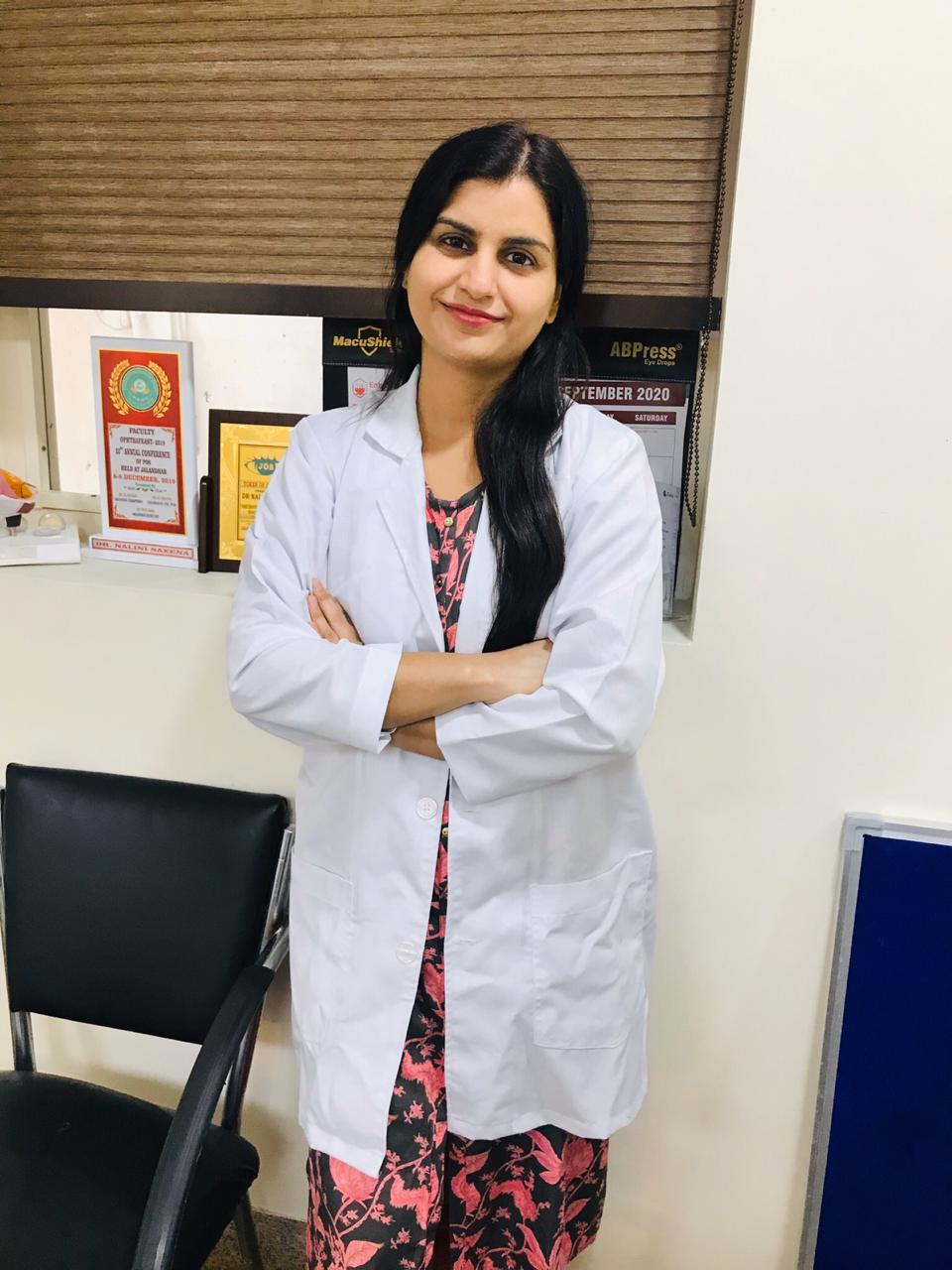
A cataract (called motiya in Punjabi and Hindi) is the most common reason for slowly fading eyesight after the age of 50. The good news is that it is also one of the most successful operations in all of medicine. At Drishti Eye Care & Retina Centre in Lambra, Jalandhar, Dr Nalini Saxena performs stitchless cataract surgery and has completed more than 5000 cataract surgeries.
This page explains, in simple words, what a cataract is, how the surgery is done, and what recovery looks like.
Blurry vision or trouble with night driving?
Book a cataract check with Dr Nalini Saxena. Call or send a WhatsApp message — Mon to Sat, 10 AM to 6 PM.
What is a cataract?
Inside your eye there is a small, clear lens that helps focus light so you can see. A cataract is when this lens slowly turns cloudy, like a window that has fogged up. Light cannot pass through properly, so your vision becomes dim, hazy or blurred.
Cataracts are usually a part of normal ageing. Eye drops, glasses or medicines cannot make a cataract go away. The only treatment that works is surgery, where the cloudy lens is removed and a clear artificial lens is put in its place.
Cataracts are not only for older people. They can also occur in children (from birth or after an injury) and in young adults, often because of injury, diabetes or long-term use of medicines such as steroids.
Symptoms of cataract
A cataract grows slowly, so many people do not notice it at first. Look out for these signs:
- Blurred, cloudy or “smoky” vision that glasses do not fix
- Difficulty driving at night, with glare and halos around headlights
- Bright sunlight feels uncomfortable
- Colours look faded or yellowish
- Needing a brighter light to read
- Frequent changes in your glasses number
- Seeing double with one eye
Diabetes makes a cataract develop earlier. If you have diabetes, a yearly eye check is important, both for cataract and for diabetic retinopathy, which damages the back of the eye.
When to see a doctor
Get your eyes checked if blurred vision is affecting your daily life: reading, cooking, driving or recognising faces. There is no need to wait for the cataract to become “ripe”. That is an old idea. Stitchless surgery is easier when the cataract is not too hard.
Sudden loss of vision, eye pain with redness, a shower of new floaters, or flashes of light. These are not cataract symptoms. They can be signs of a retinal detachment or other urgent problems, and need to be seen the same day.
A cataract left for many years becomes very hard and can, in rare cases, raise the pressure inside the eye — one cause of glaucoma. Timely surgery avoids this.
How Dr Nalini treats cataract
Dr Nalini Saxena did her MS in Ophthalmology at Maulana Azad Medical College, New Delhi, and later trained for two months in Germany in complex cataract and vitreo-retinal surgery. Cataract surgery is the operation she performs most often, with over 5000 surgeries completed.
At Drishti Eye Care she performs stitchless cataract surgery. The cloudy lens is broken up and removed through a very small opening in the eye. A folded artificial lens (called an IOL, or intra-ocular lens) is then placed inside and opens up in position. The opening is so small that it seals on its own, so no stitches are needed.
Choosing your lens
The artificial lens stays in your eye for life, so choosing it well matters. A standard lens gives clear distance vision, and you use reading glasses for close work. Newer lens designs, such as EDOF (extended depth of focus) lenses, aim to reduce your dependence on glasses for middle and near distances. Dr Nalini explains the difference in her YouTube video on the best lens for cataract surgery. She will help you choose based on your eye, your work and your budget.
Complex cataracts
Some cataracts are harder to operate: very hard (mature) cataracts, cataracts after injury, or cataracts in patients who also have retinal disease. Dr Nalini is a trained vitreo-retinal surgeon, so both the front and the back of the eye can be handled by the same doctor. When the natural support for the lens is missing, she can fix the lens to the wall of the eye — a procedure called scleral fixation of IOL.
What to expect on the day
- Before surgery. Your eye is examined and measured to choose the lens power. Sugar and blood pressure should be under control. Have a light meal and bring someone with you.
- Preparation. Drops are put in the eye to widen the pupil and to numb the surface. You stay awake, but you will not feel pain. You may see light and movement during the surgery.
- The surgery. The operation itself usually takes well under half an hour. You will be asked to lie still and look at a light.
- After surgery. The eye is covered with a protective shield and you go home the same day. No overnight stay is needed.
Recovery after cataract surgery
Most patients see clearly by the next day. Full healing takes around three weeks. During this time:
- Use the eye drops exactly as prescribed. They prevent infection and control swelling.
- Do not rub or press the eye. Wear the shield while sleeping for the first few days.
- Keep water, dust and smoke out of the eye. No head bath or swimming until advised.
- Reading, watching TV and walking are fine from the first day.
- You can drive, but avoid night driving for at least one week.
- Come for your follow-up visits. New glasses, if needed, are prescribed after a few weeks.
Mild irritation or watering is normal for a few days. Pain, sudden drop in vision or increasing redness is not — call us right away.
Cost of cataract surgery in Jalandhar
We do not list a single fixed price, because the cost depends on a few things that differ from patient to patient:
- Type of lens. A standard lens costs less. Premium lenses such as EDOF or other advanced designs cost more, because of the lens itself.
- Complexity of the cataract. A very hard cataract, a previous eye injury, or a weak lens support (needing scleral fixation) takes more time and more equipment.
- Other eye conditions. If you also need treatment for the retina or glaucoma, this is planned and costed separately.
- One eye or both. Each eye is a separate procedure, usually done a few days or weeks apart.
After your examination we give you a written estimate covering the lens, surgery and follow-up. If you have insurance or a government scheme card, ask our staff about the paperwork.
Frequently asked questions
Ready to see clearly again?
Talk to us about stitchless cataract surgery in Jalandhar. We will explain the lens options and give you a clear cost estimate before anything is booked.