Many people think an eye test is only about getting the right glasses. That is one small part. A comprehensive eye examination checks the whole eye, from the front surface to the retina at the very back, and looks for diseases that cause no symptoms until they have already done damage — glaucoma, diabetic retinopathy and early cataract among them. For people over 40, and for anyone with diabetes, a yearly full examination is one of the simplest ways to protect their sight.
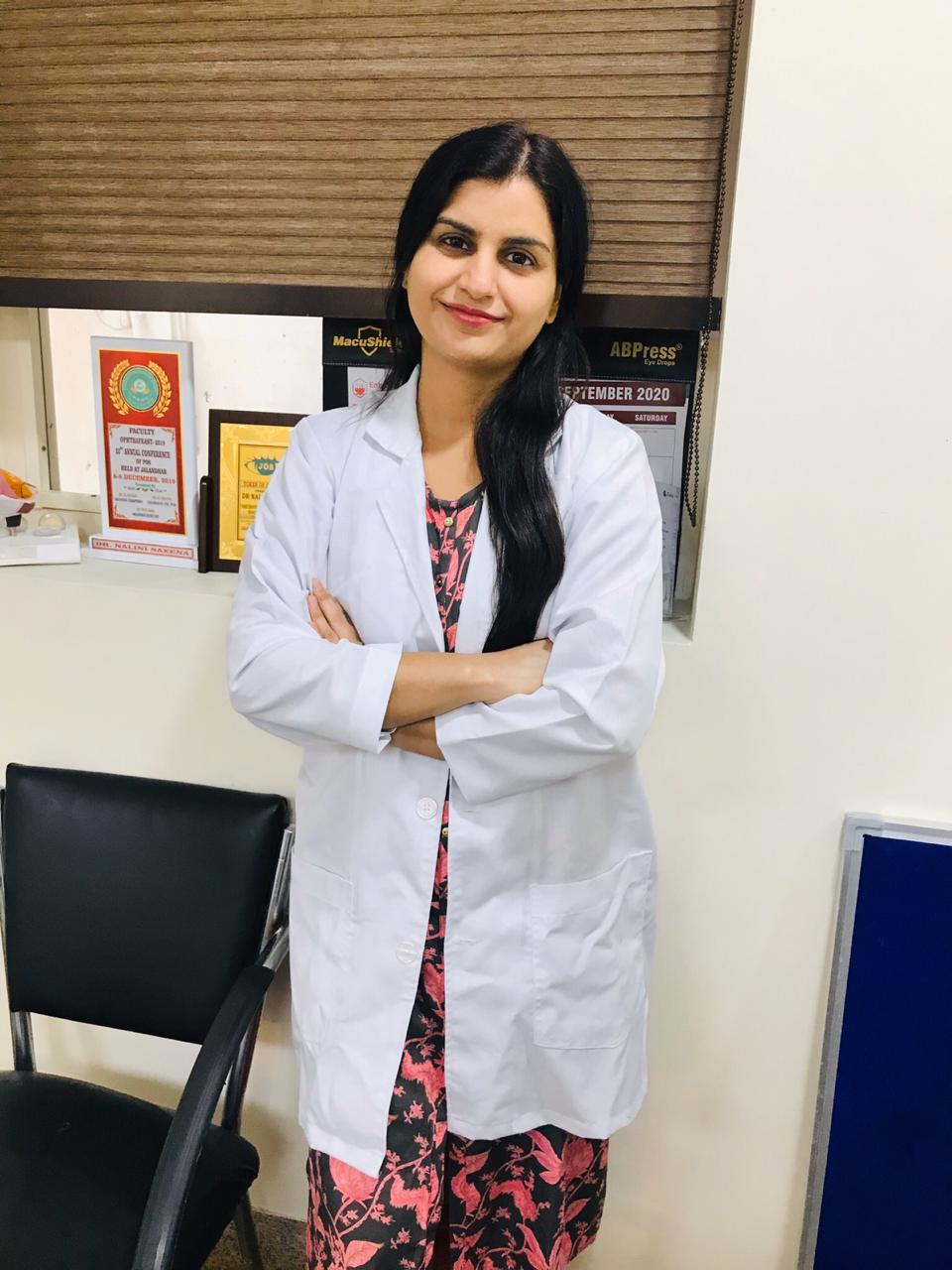
At Drishti Eye Care & Retina Centre in Lambra, Jalandhar, Dr Nalini Saxena, MS Ophthalmology from Maulana Azad Medical College and a fellowship-trained vitreo-retinal surgeon, includes the retina in every full examination. That is the part many routine eye tests leave out.
When was your last full eye check?
Cataract, glaucoma and diabetic retinopathy all start without symptoms. Book a comprehensive eye examination with Dr Nalini Saxena — call or WhatsApp us.
What is a comprehensive eye examination?
It is a step-by-step check of every part of the eye that affects vision. A full examination usually includes:
- Vision testing — reading the chart with and without glasses, one eye at a time.
- Glasses number — measured with an instrument and then fine-tuned by trial lenses. In children, drops are used first to relax the focusing muscle so the true number is found.
- Eye pressure — measured painlessly after numbing drops. Raised pressure is the main cause of glaucoma, and you cannot feel it.
- Front of the eye — the lids, the surface, the cornea, the iris and the lens are examined under a microscope with a bright light. This is where dry eye, infections, allergies and cataract are seen.
- Eye movements and alignment — to pick up a squint or a weak eye muscle.
- Dilated retina examination — drops widen the pupil so the retina and the optic nerve can be seen fully. This is the part that finds diabetic changes, glaucoma damage, retinal thinning and tears, and age-related changes at the centre of the retina.
- Scans of the retina or the optic nerve, when the examination shows something that needs measuring or tracking over time.
Signs you should not ignore
Book a full examination, not just a glasses check, if you notice:
- Blurred vision that new glasses do not fix
- Glare, halos around lights, or trouble driving at night
- Straight lines looking wavy, or a blurred patch in the centre of your vision
- New floaters, flashes of light, or a shadow in your side vision — these need to be seen the same day
- Red, watery, itchy or gritty eyes that keep coming back
- In a child: sitting very close to the TV, squinting, tilting the head, or one eye turning
Who needs an eye check, and how often?
- Everyone over 40 — every one to two years, for glaucoma and early cataract.
- Everyone with diabetes — every year from the day diabetes is diagnosed, even with perfect vision. Diabetic retinopathy has no early symptoms.
- High blood pressure, thyroid disease, or long-term steroid use — yearly.
- Family history of glaucoma — yearly from around age 40, or earlier if advised.
- High glasses number (high minus or plus) — yearly, including a retina check, as the retina is thinner and more prone to tears.
- Children — at least once before starting school, and then every one to two years. Vision problems found before 7 to 8 years of age are far easier to treat.
- After any eye injury, and before and after any eye surgery.
This is the most common reason people lose sight to glaucoma and diabetes. Both diseases leave the centre of your vision sharp until late. Only an examination can find them early, while they can still be controlled.
How Dr Nalini approaches your examination
Dr Nalini Saxena has more than ten years of experience as an eye surgeon and has passed the examination of the Royal College of Surgeons. Because her specialty is the retina, the back of the eye is examined with the same care as the front at every full check-up — not just when there is a complaint.
At the end of the examination you get a plain-language explanation of what was found, a written report, and one of three outcomes:
- All clear — with a date for your next routine check.
- Something to watch — for example an early cataract or borderline eye pressure — with a plan for how often to review it.
- Something to treat — with the treatment explained, the options and costs discussed, and, where surgery or injections are needed, the ability to have them done at the same centre by the same doctor.
If you have reports or scans from another clinic, bring them. Comparing old and new findings is often more useful than a single examination.
What to expect on the day
- Plan for one to two hours. The dilating drops take 20 to 30 minutes to work, and the examination itself is done in stages.
- Bring your current glasses, any previous eye reports, and a list of the medicines you take, including for diabetes, blood pressure and thyroid.
- Bring someone with you. After dilation your vision will be blurry and light-sensitive for three to four hours, and you should not drive.
- Contact lens wearers: remove lenses before the examination and bring your glasses.
- Children: bring a snack and a toy. The drops sting for a few seconds; blurred near vision lasts the rest of the day.
After the examination
There is no recovery as such, but a few things to know:
- Blurred vision and large pupils from the drops settle within a few hours. Sunglasses help outdoors.
- If a glasses prescription is given, it is valid for use at any optician.
- If a review date is given, please keep it. Conditions that are “being watched” are only safe while they are actually watched.
- If a treatment plan is given, the next step — drops, injections or surgery — is explained in writing so you can discuss it with your family.
Cost of an eye check-up in Jalandhar
A comprehensive examination costs more than a quick glasses test at an optical shop, because it takes longer and covers much more. The cost depends on:
- Consultation with the doctor, which includes vision, glasses number, pressure, and the front and back of the eye.
- Dilation and a detailed retina examination, when done.
- Scans of the retina or the optic nerve, only if they are needed.
- Special tests such as a field-of-vision test for suspected glaucoma.
The charges are explained before the examination, and no test is added without telling you why.
Frequently asked questions
Book your eye check-up in Jalandhar
Drishti Eye Care & Retina Centre, Lambra. Mon to Sat, 10 AM to 6 PM. Call or WhatsApp to book.